
Damage control
What bowlers do to survive in the shortest, cruellest format of the game

Aakash Chopra
05-Nov-2009
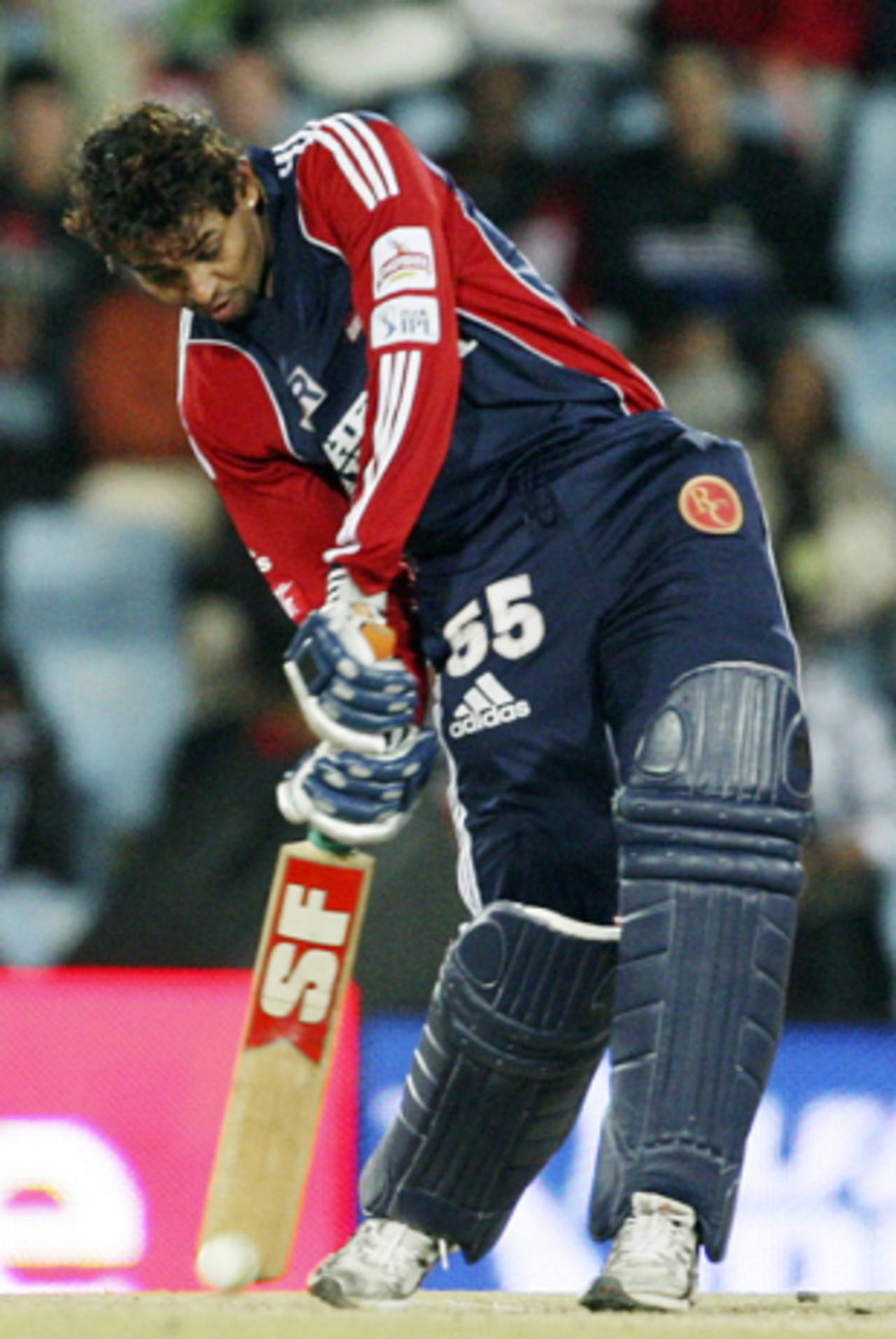
The game has changed a lot, but the yorker continues to be one of the more effective deliveries • Associated Press
Traditionally bowlers tend to win Tests for teams, and batsmen ODIs. An offshoot of 50-over cricket, Twenty20 follows the parent format. Twenty20 is perhaps even more about sixes than yorkers. While most who matter accept that Twenty20 is a batsman's prerogative, how can one expect bowlers to remain unfazed? It's rather difficult to defend when batsmen come armed with a single motive, and without the responsibility of lasting 50 overs.
Bowlers who go for around five-six runs an over in ODIs consistently go for plenty more in this format. What stops batsmen from going after the bowling in an ODI is not only the quality of bowling but also the fear of getting out. The top six batsmen are supposed to bat 50 overs. In Twenty20, however, there's no such burden on them and batsmen have the licence to go after the bowling from the start.
Also, there's very little to choose between a Muttiah Muralitharan and a Yusuf Pathan in this format. On a given day Yusuf, a part-time offspinner, might be more effective than the man with the most Test wickets in the world. Respect for bowlers has gone down remarkably. In other formats batsmen would like to give respect to certain bowlers and target the rest, but in a Twenty20 bash you are almost forced to treat everyone equally. Every ball coming your way needs to be met with aggression regardless of who has bowled it.
So bowlers have gone back to the drawing board and chalked out a few ways to counter the assault they have been subjected to in Twenty20.
Three lengths
For starters, bowlers have realised that only three lengths work in this format: yorkers, just short of good length, and bouncers. Only in the first couple of overs, when the ball is swinging and the batsmen are slightly guarded, can a bowler can get away with bowling any length other than the three mentioned above. In that early period one can try to pitch it up to the bat, hoping to take it away or bring it in to the batsman, but as soon as the ball loses its sheen, bowling full is considered criminal. Once the batsman has made up his mind to go on the offensive, it's mandatory to hit the desired length at will.
For starters, bowlers have realised that only three lengths work in this format: yorkers, just short of good length, and bouncers. Only in the first couple of overs, when the ball is swinging and the batsmen are slightly guarded, can a bowler can get away with bowling any length other than the three mentioned above. In that early period one can try to pitch it up to the bat, hoping to take it away or bring it in to the batsman, but as soon as the ball loses its sheen, bowling full is considered criminal. Once the batsman has made up his mind to go on the offensive, it's mandatory to hit the desired length at will.
There are no half measures, as the margin of error is very small. A slight error in length turns an intended yorker into a half-volley or a full-toss, resulting in a hit to the fence.
Yorkers, which were bowled mostly in the death overs in ODIs, are used liberally in this format. Earlier yorkers were supposed to be directed towards the batsman's toes, but nowadays bowlers have also started bowling them outside the off stump. Players like MS Dhoni have found a way of hitting yorkers directed at their legs. They clear their front leg and make room to swing their arms. Bowlers have started going wide outside off stump to counter that.
Change of pace
Another skill that most bowlers have tried to master is bowling the slower ball. Most bowlers practise different kinds of slower ones: from the back of the hand, the split-finger one, the traditional offcutter, and some like Sreesanth have even tried bowling proper legbreaks. But more than the variety it's the ability to bowl the delivery while under pressure, and disguise it, that make it work.
Another skill that most bowlers have tried to master is bowling the slower ball. Most bowlers practise different kinds of slower ones: from the back of the hand, the split-finger one, the traditional offcutter, and some like Sreesanth have even tried bowling proper legbreaks. But more than the variety it's the ability to bowl the delivery while under pressure, and disguise it, that make it work.
The slower bouncer is a new addition to this category. Shaun Pollock started bowling it a long time ago, but there weren't many takers for it till recently. Now we see many bowlers using it to great effect.
Start well, finish well
Stats suggest that the first and last balls of overs are the most expensive balls in Twenty20, and all bowlers now know the importance of starting and finishing an over strongly. The first and last balls, after all, make one-third of a bowler's quota in any format of the game. Starting an over strongly puts pressure on the batsman to do something out of ordinary in the remaining five balls, and finishing well reduces the pressure on the bowler bowling from the other end. That's what bowling in partnerships is all about, where both bowlers complement each other to create an impact.
Stats suggest that the first and last balls of overs are the most expensive balls in Twenty20, and all bowlers now know the importance of starting and finishing an over strongly. The first and last balls, after all, make one-third of a bowler's quota in any format of the game. Starting an over strongly puts pressure on the batsman to do something out of ordinary in the remaining five balls, and finishing well reduces the pressure on the bowler bowling from the other end. That's what bowling in partnerships is all about, where both bowlers complement each other to create an impact.
Bowlers have made peace with the fact that they are going to be hit, and that acceptance has led them to devise different strategies. Instead of trying to stop batsmen from hitting, bowlers try and ensure that batsmen can hit only in the direction they want them to hit
No looseners
This brings us to the importance of keeping yourself warm and loose through out the game. One can't afford to bowl a couple of warm-up balls to a fellow player because of the time constraints; you also can't afford to start the spell with a loosener. This is why bowlers, while standing at the boundary, bowl to their non-playing team-mates or support staff, who stand with a baseball glove on to assist them.
This brings us to the importance of keeping yourself warm and loose through out the game. One can't afford to bowl a couple of warm-up balls to a fellow player because of the time constraints; you also can't afford to start the spell with a loosener. This is why bowlers, while standing at the boundary, bowl to their non-playing team-mates or support staff, who stand with a baseball glove on to assist them.
The single is the new dot-ball
In other formats only a wicket-taking delivery and a maiden are considered good deliveries, but Twenty20 has widened the definition. A single conceded off a ball is considered as good as a dot-ball in most situations. Bowlers know this, and are seen giving singles after bowling a dot-ball or two.
In other formats only a wicket-taking delivery and a maiden are considered good deliveries, but Twenty20 has widened the definition. A single conceded off a ball is considered as good as a dot-ball in most situations. Bowlers know this, and are seen giving singles after bowling a dot-ball or two.
Go-to deliveries
Just like batsmen have their go-to shots, bowlers also master their go-to deliveries, which they rely on themselves to execute perfectly under pressure. They could be yorkers, bouncers or slower ones, which will bail them out in a tight situation.
Just like batsmen have their go-to shots, bowlers also master their go-to deliveries, which they rely on themselves to execute perfectly under pressure. They could be yorkers, bouncers or slower ones, which will bail them out in a tight situation.
Accepting the inevitable
Another interesting development is that bowlers have made peace with the fact that they are going to be hit, and that acceptance has led them to devise different strategies. Instead of trying to stop batsmen from hitting, bowlers try and ensure that batsmen can hit only in the direction they want them to hit. For example, if the bowler has set a heavy off-side field, he tries to bowl in areas from where he can't be hit towards the on side.
Another interesting development is that bowlers have made peace with the fact that they are going to be hit, and that acceptance has led them to devise different strategies. Instead of trying to stop batsmen from hitting, bowlers try and ensure that batsmen can hit only in the direction they want them to hit. For example, if the bowler has set a heavy off-side field, he tries to bowl in areas from where he can't be hit towards the on side.
Sounds tough? Well, it is tough on the bowlers. Didn't they tell you it's a batsman's game?
Former India opener Aakash Chopra is the author of Beyond the Blues, an account of the 2007-08 Ranji Trophy season. His website is here