
The cat that deserved the cream
The iconic West Indies captain's rise from humble origins to world-conquering leader
Colin Shindler
02-Dec-2007
Supercat: The Authorised Biography of Clive Lloyd by Simon Lister
(Fairfield Books, 224pp) £18.99

(Fairfield Books, 224pp) £18.99
 |
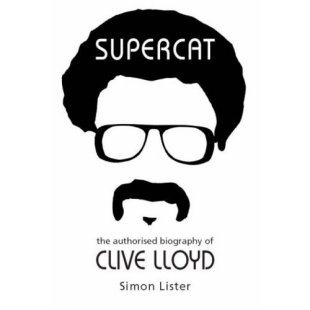 |
Clive Lloyd is, in nearly all respects, a heroic figure in the world of cricket, and particularly in the history of West Indies cricket. His achievements as a player are statistically impressive and the all-conquering team he captained in the 1970s and 1980s played a significant part in giving West Indians in all parts of the world a pride in their heritage.
Those of us who grew up in Lancashire and saw Clive Lloyd playing for his adopted county from 1969 onwards are just as grateful. We took to him immediately and he took to us. He, along with Wasim Akram and Farokh Engineer, was the most successful of our overseas signings because he liked Lancastrians and lived happily among them. He was the very opposite of an overseas mercenary. Indeed, according to Simon Lister's admirable biography, when Lloyd was struggling in his early Test career and was unhappy with the way he was being treated by the West Indies selectors, he could not wait to get back to Manchester and play county cricket with those perennial pranksters, Harry Pilling and Johnny Sullivan.
It was Lloyd who instilled in his West Indies teams a sense of discipline and professional pride. He, like all those who followed him, acknowledged what Frank Worrell had done to turn the cricketers from individual islands into players who all thought of themselves primarily as West Indians, but it was Lloyd who fought with a passion to rid the West Indies game of the "calypso cricketers" headline. It was a demeaning, condescending label and he loathed it. After Old Trafford 1976 nobody ever accused West Indian cricketers of playing with a smile on their faces.
This controversial Test match lies at the root of the doubts that linger when Lloyd's captaincy is discussed, and Lister treats the accusations fairly. The last 80 minutes of play on the Saturday evening, when 39-year-old John Edrich and 45-year-old Brian Close were subjected to an unrelenting barrage of intimidating fast bowling from Andy Roberts, Michael Holding and Wayne Daniel remain lodged in the minds of all of us who witnessed that mesmerising passage of play.
Lloyd has always remained unapologetic and Lister lists the reasons why he has done so. When Bert Flack, the concerned Lancashire groundsman, showed the pitch to Tony Greig, England's captain was content in his belief that Derek Underwood would bowl out West Indies on it. The selectors chose these veteran players knowing full well that they would be exposed to the fury of the West Indies pace attack, and the umpires who could have stopped it did not do so. Why should Lloyd? If Greig had had Lloyd's bowlers rather than Mike Selvey, Mike Hendrick and Pat Pocock, would he have behaved any differently?
It appears that neither Edrich nor Close bears any grudges but Lloyd's reputation diminished a little after that and this still rankles with him, for in his own admirable and impressive way, he appears very conscious of the
dignity of the position he has achieved in the world.
It is hard to fault a man who has triumphed after a disadvantaged upbringing by a single parent in straitened
circumstances in Guyana. He worked hard at school, went to church, took his cricket seriously and fought back after failure. One of the few times he admits to real anger is when Brian Lara's team chose to stay in a hotel near
Heathrow and demand more money from the West Indies board rather than fly to South Africa where they were due to meet Nelson Mandela.
Lister has done well to extract as much as he has from a man to whom diplomatic reticence and good manners come naturally. It is no wonder Lloyd appears not to have an enemy in the world, and even Mike Brearley wishes he had not written slightingly of Lloyd's captaincy. From Lister's book we understand he did more than change the bowling every half-hour, but Brearley's point that Lloyd was a poor captain of a poor Lancashire team remains valid. The book suggests why this might have been.
Lloyd's views on his heroes like Mandela and Worrell and the importance of cricket in the history of the West Indies are admirable but scarcely surprising. He remains the key man in one of the great teams of all time but unfortunately that does not automatically make him a great biographical subject. The legend of Clive Lloyd remains intact.
This review was first published in the December 2007 edition of the Wisden Cricketer. Colin Shindler is the author of Manchester United Ruined My Life